Optimization approach for robotic assembly line balancing in constrained greenfield and reconfiguration scenarios
 Albus 2025
Abstract
This research explores the potential of automated optimization techniques in reducing costs for the Robotic Assembly Line Balancing Problem (RALBP) in greenfield and reconfiguration scenarios. The introduction analyses the shifts towards flexibility and mass customization and identifies the manufacturing requirements on the Assembly Line Balancing (ALB). Various problem formulations are examined and reviewed on real-world requirements, leading to the definition of the RALBP with Task Types (RALBP-TT). The manufacturing requirements of mass personalization highlight the necessity for reconfiguration solutions, and an investigation of existing models reveals the need for improvements. Solution techniques are compared based on their ALB suitability and manufacturing requirements, highlighting the exact methods as best suited. As a result, an exact Integer Programming (IP) model for greenfield and reconfiguration scenarios and a Genetic Algorithm (GA) model for validation are presented. The models include additional constraints, a multi-cost approach, and a resource database. The performance of the IP and GA models are validated and compared using a new benchmarking dataset, and the discussion shows that the IP model can leverage existing equipment for cost reduction but with compromises. In comparison, the GA drastically reduces computation time but yields higher total costs due to its sequential nature and compromises in equipment and workstation usage. Future research directions could investigate flexible cycle time constraints for the IP model or improve the sequential GA steps. Furthermore, a multiobjective approach to addressing sustainability goals, or the objective of equipment reduction, is worth investigating. Real-world validation and refinement of optimization models based on customers’ feedback are suggested for further investigation.
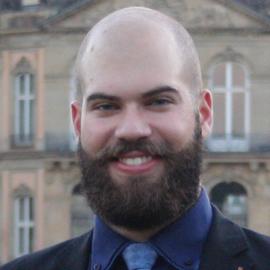
Marcel Albus, PhD
Senior Automation Engineer
Automation Engineer and Scientist specializing in automated pharmaceutical laboratories, industrial automation, and robotics. With expertise in mathematical optimization, machine learning, and global automation engineering, backed by a PhD from University of Stuttgart and a strong background in software development and robotic assembly systems.